
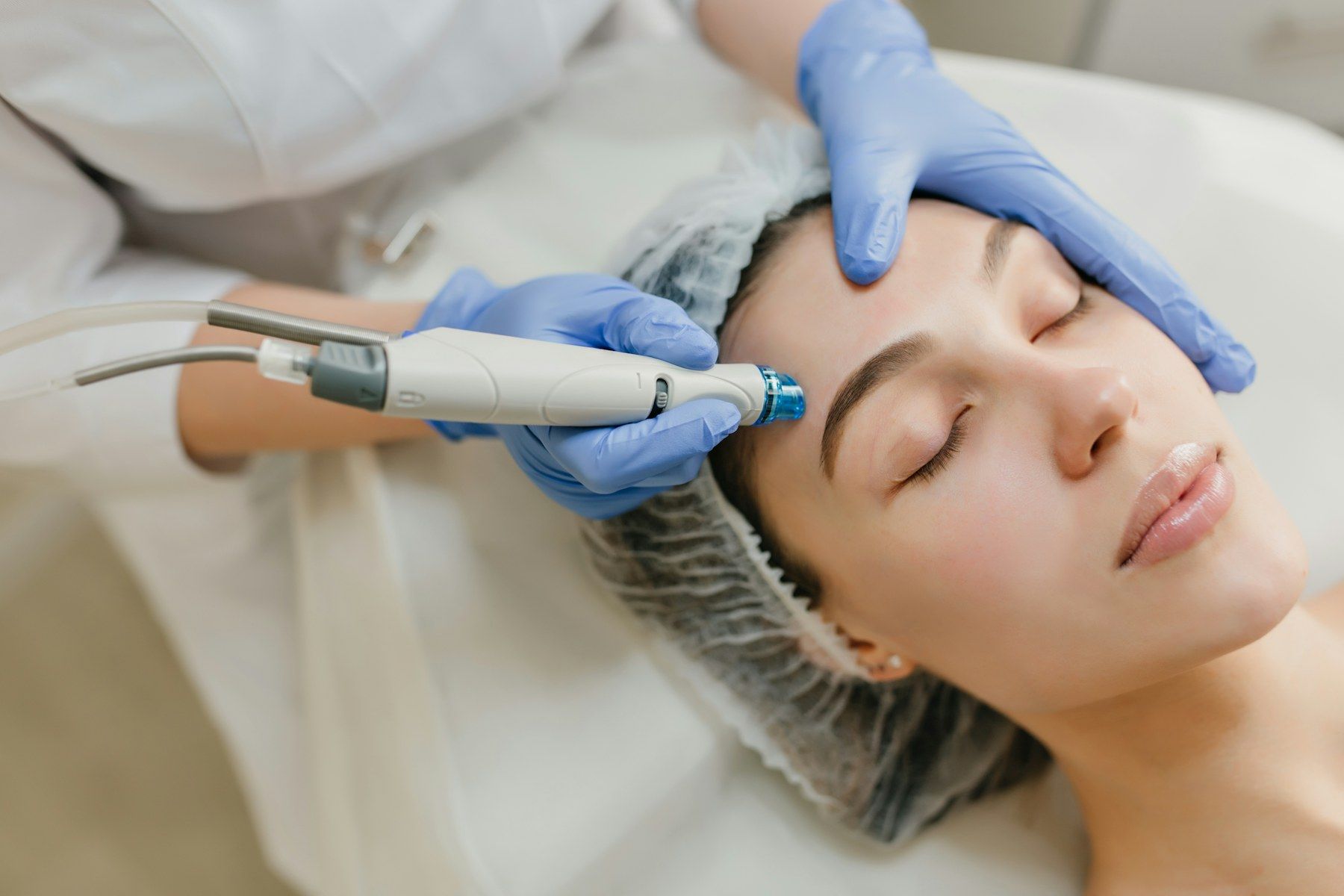
Skin rejuvenation
PRP Facial Skin Rejuvenation
Natural Skin Rejuvenation Using Your Own Platelet-Rich Plasma
Discover a natural approach to skin rejuvenation with PRP Facial Treatment at DermaTec Med Aesthetic Clinic.
As we age, our skin gradually loses collagen, elasticity and firmness. Fine lines, uneven texture, dullness and changes in skin quality can become increasingly noticeable.
Price at your free consultation
- Initial course
- 3 sessions
- Interval
- About 4–6 weeks
- First step
- Free consultation
About the treatment
What Is PRP Facial Rejuvenation?
Platelet-Rich Plasma (PRP) Facial Rejuvenation is an advanced aesthetic treatment that uses a concentrated preparation of your own blood platelets to support the skin's natural repair and renewal processes.
PRP contains platelets and naturally occurring growth factors that participate in tissue repair, cellular signalling and wound healing. When administered into selected areas of the skin by a suitably qualified practitioner, PRP may help improve skin texture, fine lines and overall skin quality.
The treatment uses your own blood-derived plasma and is designed to encourage a fresher, smoother and healthier-looking complexion.
PRP stands for Platelet-Rich Plasma. It is prepared by collecting a small sample of your blood and processing it in a specialised centrifuge to separate and concentrate the platelets within the plasma.
Platelets contain growth factors and signalling proteins involved in the body's natural healing and tissue repair mechanisms.
In aesthetic medicine, PRP is used to support skin rejuvenation by stimulating biological processes associated with collagen production and tissue renewal.
Unlike conventional dermal fillers, PRP is not designed to add facial volume or change facial contours. Its purpose is to improve selected aspects of skin quality.
How it works
How Does PRP Improve Skin Quality?
Platelets release several biologically active growth factors, including:
- PDGFPlatelet-Derived Growth Factor
- Involved in cell signalling and tissue repair.
- TGF-βTransforming Growth Factor Beta
- Participates in collagen formation and tissue remodelling.
- VEGFVascular Endothelial Growth Factor
- Involved in the formation and maintenance of blood vessels.
- EGFEpidermal Growth Factor
- Participates in cellular growth, migration and repair.
These signalling molecules are involved in processes that support normal skin repair and regeneration.
PRP may help stimulate dermal activity and improve aspects of skin texture and appearance over time. The degree of improvement varies between individuals, and clinical evidence for cosmetic facial rejuvenation remains mixed.
Benefits
Benefits of PRP Facial Rejuvenation
PRP may offer several potential benefits for suitable clients:
01
Improved Skin Texture
May help improve rough or uneven skin texture, giving the complexion a smoother appearance.
02
Fine Line Improvement
May help soften the appearance of selected fine lines, particularly when skin quality and elasticity are contributing factors.
03
Collagen Support
Growth factors released by platelets participate in processes associated with collagen production and tissue remodelling.
04
Brighter-Looking Complexion
Some clients may notice a fresher, more radiant appearance following treatment.
05
Improved Skin Quality
May help improve the appearance of tired or dull-looking skin.
06
Under-Eye Rejuvenation
PRP may be considered for selected patients with fine lines and crepey skin around the eyes. Dark circles caused by pigmentation, prominent blood vessels or anatomical shadowing may not respond.
07
Natural Treatment Approach
PRP is prepared from the client's own blood, reducing the risk of an allergic reaction to the plasma itself.
Treatment areas
Which Areas Can Be Treated?
PRP facial rejuvenation may be considered for several areas:
- Forehead and fine lines.
- Cheeks and mid-face.
- Under-eye area.
- Around the mouth.
- Chin.
- Jawline.
- Neck and décolletage.
- Selected areas with uneven skin texture.
Treatment suitability depends on skin condition, anatomy and the practitioner's assessment.
The procedure
How Is PRP Facial Treatment Performed?
The procedure generally involves five stages.
01
Consultation and Skin Assessment
The practitioner evaluates the client's skin condition, medical history, treatment expectations and suitability for PRP.
The treatment areas are identified and an individual treatment plan is discussed.
02
Blood Collection
A small sample of blood is collected using a sterile blood collection system.
03
Centrifugation
The blood sample is placed in a specialised centrifuge to separate the plasma and concentrate the platelets.
04
PRP Preparation and Administration
The platelet-rich plasma is prepared using an appropriate sterile technique.
Depending on the treatment plan, PRP may be administered through carefully selected superficial injections or used with an appropriate microneedling procedure.
The technique is selected according to the treatment area, skin condition and practitioner assessment.
05
Post-Treatment Care
The skin is allowed to recover, and the client receives personalised aftercare instructions to support healing and minimise irritation.
Techniques
PRP Injection vs PRP Microneedling
PRP can be incorporated into facial rejuvenation using different techniques.
PRP Injections
PRP is introduced into selected areas of the skin using an appropriate injection technique.
This approach allows targeted administration to specific treatment areas.
PRP with Microneedling
A microneedling device creates controlled superficial microchannels in the skin. PRP may be applied topically as part of the procedure.
Microneedling itself stimulates a wound-healing response, while PRP may provide additional biological signalling.
The two approaches are not interchangeable, and the most appropriate technique depends on the client's skin and treatment objectives.
Sessions
How Many PRP Facial Treatments Are Needed?
PRP facial rejuvenation is generally performed as a course of treatments rather than a single session.
A commonly used treatment approach is:
- Initial course
- 3 sessions
- Interval
- Approximately 4–6 weeks between sessions
- Assessment
- Around 8–12 weeks after the initial course
- Maintenance
- May be considered every 6–12 months depending on the client's response
The exact number and frequency of treatments are tailored to each client, as there is no universally established PRP facial protocol.
Results
When Will I See Results?
Skin rejuvenation is a gradual process.
Some clients may notice an improvement in skin appearance after the initial treatment, while changes associated with collagen remodelling may take several weeks or months.
Potential improvements include:
- Smoother-looking skin.
- Improved skin texture.
- A fresher-looking complexion.
- Softer appearance of selected fine lines.
- Improved overall skin quality.
Results vary according to age, skin condition, lifestyle, treatment technique and individual biological response.
PRP cannot stop the natural ageing process or guarantee the removal of wrinkles, pigmentation or scars.
Safety
Is PRP Facial Rejuvenation Safe?
PRP uses a preparation derived from the client's own blood. This makes an allergic reaction to the plasma itself unlikely.
However, as with any injection or microneedling procedure, side effects and complications are possible.
Temporary effects may include:
- Redness.
- Swelling.
- Mild bruising.
- Tenderness.
- Small injection-site marks.
- Temporary skin sensitivity.
Less common but potentially serious complications include infection, prolonged inflammation, scarring and injury to underlying structures.
Treatment is performed using appropriate sterile equipment and aseptic procedures by a suitably qualified and trained practitioner.
Your consultation
Start with an individual assessment
Your starting point and goals are individual. Results vary from person to person.
We will discuss what is realistic for you at your free consultation.
Who it suits
Who Is Suitable for PRP Facial Treatment?
PRP may be considered for adults who wish to improve selected aspects of skin quality, particularly mild textural changes, fine lines and early signs of skin ageing.
A medical assessment is essential before treatment.
PRP may be unsuitable or require additional medical evaluation in cases involving:
- Platelet disorders or significantly abnormal platelet counts.
- Certain blood disorders.
- Active skin infections in the treatment area.
- Significant active inflammatory skin conditions.
- Certain cancers or blood-related malignancies.
- Certain medications affecting blood clotting or platelet function.
- Pregnancy or breastfeeding, where elective treatment is generally deferred.
Suitability is determined individually. Prescribed medication should never be stopped without medical advice.
Other treatments
PRP Facial Rejuvenation Compared with Other Treatments
PRP may be used as part of a broader skin-rejuvenation programme, but it is not a replacement for every aesthetic treatment.
PRP vs Dermal Fillers
PRP aims to improve aspects of skin quality. Dermal fillers are primarily used to restore volume, enhance contours and reduce selected folds.
PRP vs Skin Boosters
Skin boosters use injectable products, often hyaluronic acid-based, to improve hydration and selected skin-quality concerns. PRP uses the client's own blood-derived platelets.
PRP vs Microneedling
Microneedling stimulates a controlled skin repair response. PRP may be incorporated into the procedure, although the additional benefit of PRP varies and is not fully established.
PRP vs Laser Rejuvenation
Laser treatments use controlled light energy to target selected skin concerns, depending on the laser type. PRP works through biological signalling associated with tissue repair.
The best approach depends on the client's skin condition and treatment goals.
At the clinic
Why Choose PRP at DermaTec Med Aesthetic Clinic?
At DermaTec Med Aesthetic Clinic, we believe that good aesthetic treatment begins with an individual assessment and realistic expectations.
Our approach focuses on:
- Personalised skin assessment.
- Discussion of treatment suitability.
- Appropriate PRP preparation.
- Professional treatment procedures.
- Clear aftercare instructions.
- Follow-up assessment to evaluate progress.
We aim to help clients achieve healthier-looking skin through carefully selected aesthetic treatments.
Book Your PRP Facial Consultation
Would you like to improve the appearance and quality of your skin?
Discover whether PRP Facial Rejuvenation may be suitable for your skin concerns. Book your consultation at DermaTec Med Aesthetic Clinic.
DermaTec Med Aesthetic Clinic – Your Skin, Our Expertise.