
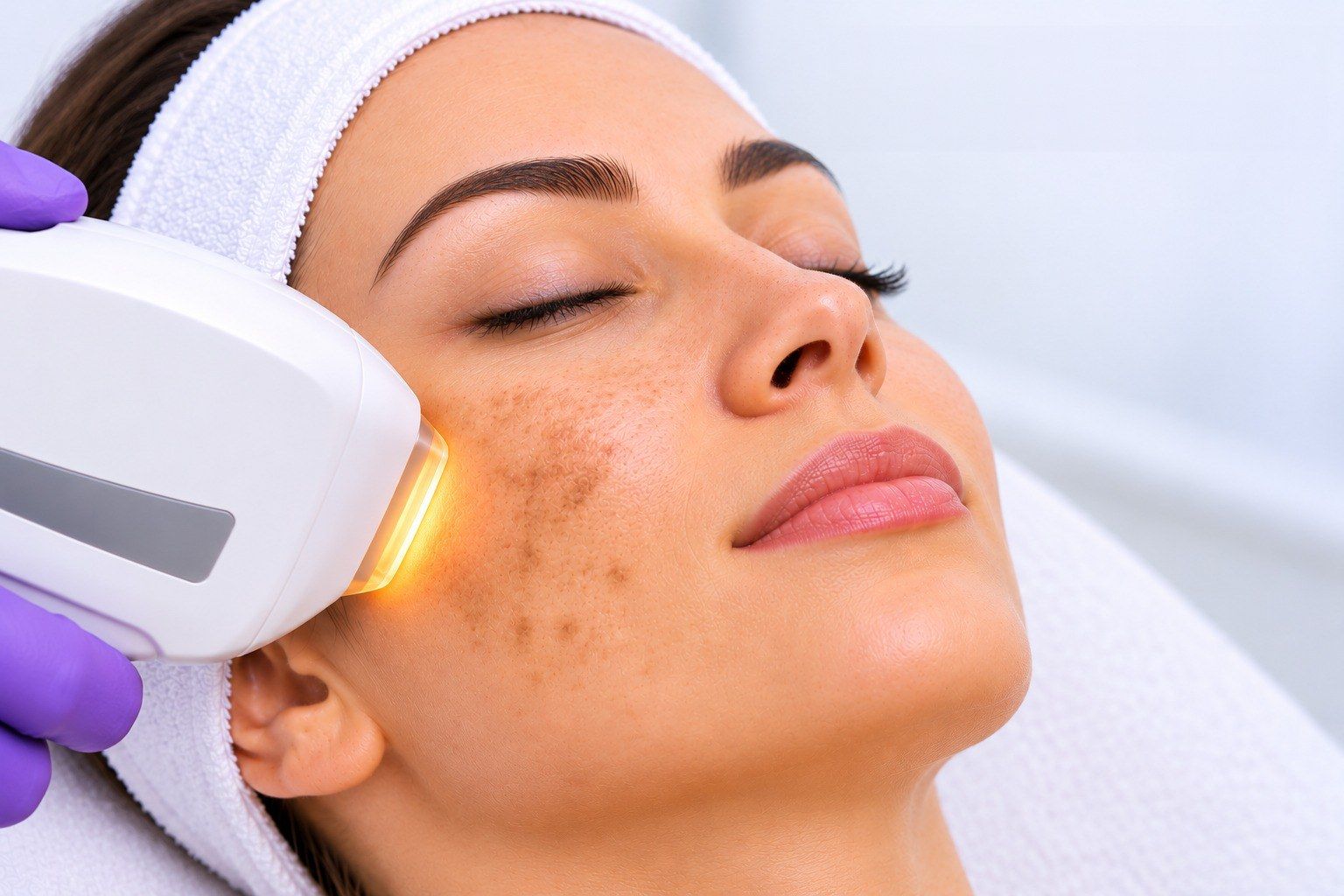
Pigmentation
OPT Laser Pigmentation Treatment
Advanced Skin Pigmentation Correction
Are you concerned about dark spots, sun damage, freckles or uneven skin tone?
At DermaTec Med Aesthetic Clinic, OPT (Optimal Pulse Technology) offers an advanced light-based treatment designed to target selected pigmentation concerns and improve the appearance of uneven skin tone.
Price at your free consultation
- Sessions
- About 3–5
- Interval
- About 3–4 weeks
- First step
- Free consultation
About the treatment
Reveal a More Even, Brighter-Looking Complexion
OPT technology uses controlled pulses of filtered light to target excess pigment in selected areas of the skin.
The light energy is absorbed by melanin, the natural pigment responsible for skin colour. This creates a controlled thermal effect that helps break down or disrupt the targeted pigment. The body's natural processes then gradually clear the treated pigment.
The result may be a clearer, more even-looking complexion, depending on the type of pigmentation, skin characteristics and individual response.
What Is OPT Pigmentation Treatment?
OPT stands for Optimal Pulse Technology. It is a form of advanced Intense Pulsed Light (IPL) technology available in certain aesthetic devices. Unlike a conventional laser, which generally uses a specific wavelength, IPL delivers a broad spectrum of light. Filters are used to select the wavelengths suitable for the intended treatment.
OPT technology is designed to provide controlled and consistent light pulses, allowing the practitioner to target selected pigmentation concerns while taking the surrounding skin into consideration.
It may be used to improve the appearance of:
- Sun spots and age spots.
- Freckles.
- Uneven skin tone.
- Selected superficial brown pigmentation.
- Pigmentation associated with sun exposure.
- Selected signs of photoaging.
The suitability of treatment depends on an accurate assessment of the pigmentation and the OPT machine's specifications.
How it works
How Does OPT Pigmentation Treatment Work?
The treatment uses the principle of selective photothermolysis.
Melanin absorbs light energy more strongly at selected wavelengths than some surrounding tissue. When the appropriate light is delivered, the targeted pigment absorbs the energy and undergoes a controlled thermal reaction.
01
Light absorption
Filtered OPT light is delivered to the treatment area.
02
Melanin targeting
The pigment absorbs selected wavelengths of light energy.
03
Controlled thermal effect
The absorbed energy produces a controlled reaction within the pigmented area.
04
Pigment breakdown
The targeted pigment is disrupted and may become more visible temporarily as it moves towards the skin surface.
05
Natural clearance
The treated pigment gradually flakes away or is cleared through the body's natural processes.
Following treatment, some pigmentation may initially appear darker before gradually fading.
What it treats
Which Skin Pigmentation Problems Can OPT Treat?
Different types of pigmentation respond differently to light-based treatments. Correct identification is essential before selecting OPT.
Sun spots and age spots
Solar lentigines
Sun spots and age spots commonly develop following years of ultraviolet exposure. They often appear as flat brown patches on areas exposed to sunlight, such as:
- Face.
- Cheeks.
- Forehead.
- Hands.
- Décolletage.
- Shoulders.
Selected superficial solar lentigines may respond well to IPL/OPT treatment.
Freckles
Freckles are small brown spots that commonly appear on sun-exposed skin.
OPT may help reduce the appearance of selected freckles by targeting their melanin content.
Freckles can return or become darker again following sun exposure, so ongoing sun protection is important.
Uneven skin tone
Uneven pigmentation can develop because of sun exposure, ageing and other skin-related factors.
OPT may help improve selected superficial pigmentation, contributing to a more uniform-looking complexion.
Sun damage
Sun Damage and Photoaging
Long-term sun exposure can contribute to:
- Brown spots.
- Uneven skin tone.
- Visible pigmentation.
- Dull-looking skin.
- Other signs of photoaging.
OPT may improve selected pigment-related signs of sun damage. It is not a substitute for sun protection or a comprehensive skin-rejuvenation programme.
Needs careful assessment
Post-Inflammatory Hyperpigmentation
Post-inflammatory hyperpigmentation (PIH) refers to dark marks that develop following inflammation or injury to the skin.
Common causes include:
- Acne.
- Skin irritation.
- Inflammation.
- Certain cosmetic procedures.
- Skin injuries.
OPT is not automatically suitable for PIH. Light-based treatment can sometimes worsen pigmentation, particularly in darker skin types or when the skin is still inflamed. Alternative treatments may be more appropriate.
Important
What About Melasma?
Melasma is a chronic pigmentation condition that commonly appears as symmetrical brown or grey-brown patches, particularly on the cheeks, forehead and upper lip.
Unlike isolated sun spots, melasma can be influenced by:
- Sunlight and ultraviolet exposure.
- Visible light.
- Hormonal factors.
- Genetic predisposition.
- Heat and other triggers.
OPT is not a routine first-choice treatment for melasma.
In some individuals, IPL or other light-based procedures may aggravate melasma or cause pigmentation to return.
Melasma should be correctly diagnosed and managed with an appropriate treatment plan, usually including strict photoprotection and suitable topical treatments. Any consideration of light-based treatment requires specialist assessment and careful risk evaluation.
Benefits
Benefits of OPT Pigmentation Treatment
When appropriately selected for suitable pigmentation concerns, OPT may offer several benefits:
- Targets selected brown pigmentationHelps reduce the appearance of certain superficial pigmented spots.
- More even-looking skin toneMay improve the appearance of uneven pigmentation.
- Non-surgical treatmentDoes not require surgical removal of pigmented skin.
- Customisable treatmentFilters and treatment parameters can be selected according to the device and the skin concern.
- Multiple treatment areasSelected pigmentation on the face and body may be treated.
- Minimal interruption for some clientsRecovery is often relatively short, although temporary redness and darkening of spots may occur.
Results vary according to the pigmentation type, skin type and treatment response.
Treatment areas
Which Areas Can Be Treated?
Subject to individual suitability, OPT pigmentation treatment may be considered for:
- Face
- Forehead
- Cheeks
- Nose
- Upper lip
- Neck
- Décolletage
- Hands
- Arms
- Shoulders
The face and hands are common areas for the treatment of selected sun spots and superficial pigmentation.
Sessions
How Many OPT Pigmentation Sessions Are Needed?
The number of treatments depends on the type, depth and extent of pigmentation. A general treatment plan may involve approximately3–5 sessions, although some superficial sun spots may respond in fewer sessions, while other conditions may require a different approach.
The number of sessions depends on:
- Type of pigmentation.
- Pigment depth.
- Size and number of affected areas.
- Skin type.
- Previous treatments.
- Individual response.
- Sun exposure and aftercare.
A consultation is necessary to establish a realistic treatment plan.
Intervals
How Often Should OPT Treatments Be Performed?
Treatment intervals depend on the device, skin response and pigmentation being treated.
3–4 weeks
For suitable superficial pigmentation concerns, sessions are commonly spaced approximately 3–4 weeks apart, but the interval should be determined by the treating practitioner.
The skin must recover fully before another session is performed.
Your appointment
What Happens During an OPT Pigmentation Treatment?
01
Initial consultation
Before treatment, the practitioner will assess:
- Type and appearance of pigmentation.
- Skin type and skin tone.
- Pigmentation depth and distribution.
- Recent sun exposure or tanning.
- Previous skin treatments.
- Relevant medical history.
- Medications and photosensitivity risks.
Any suspicious, changing or undiagnosed pigmented lesion must be medically assessed before cosmetic light treatment.
02
Skin preparation
The treatment area is cleansed and prepared.
Appropriate wavelength-specific protective eyewear is provided for the client and practitioner.
A test area may be considered where appropriate, particularly when there is uncertainty about the skin's response.
03
OPT light treatment
The practitioner selects the appropriate filter and settings for the treatment area and your skin type.
The handpiece is placed against the skin and controlled pulses of filtered light are delivered to the selected area.
The client may experience a brief warm sensation or mild snapping feeling.
04
Following treatment
Temporary redness, warmth and mild swelling may occur.
Selected pigmented spots may become darker before gradually flaking or fading.
The skin should be protected and cared for according to the practitioner's instructions.
Comfort
Is OPT Pigmentation Treatment Painful?
Most clients describe the sensation as a brief warm flash or a small elastic-band snap against the skin.
The level of discomfort varies according to:
- Treatment area.
- Skin sensitivity.
- Pigmentation density.
- Device settings.
- Individual pain tolerance.
Some areas may be more sensitive than others. Appropriate cooling may be used to improve comfort.
Recovery
Recovery
OPT pigmentation treatment generally involves relatively limited downtime, but the skin can remain temporarily sensitive.
Following the treatment, you may notice:
- Redness.
- Mild swelling.
- Warmth.
- Temporary darkening of pigmented spots.
- Small superficial crusts or flaking.
These effects usually settle as the skin recovers.
Aftercare
Recommended Aftercare
For the best recovery:
- Avoid direct sun exposure.
- Apply broad-spectrum SPF 50+ sunscreen daily once appropriate for the skin's condition.
- Reapply sunscreen when outdoors.
- Avoid tanning beds and deliberate tanning.
- Keep the treated skin clean and moisturised.
- Avoid picking or scratching darkened spots.
- Avoid exfoliating products and irritating skincare ingredients until the skin has recovered.
- Avoid retinoids and strong active skincare products for the period advised by your practitioner.
- Avoid excessive heat, saunas and activities that irritate the treated area during the initial recovery period.
- Follow the clinic's individual aftercare instructions.
Consistent sun protection is essential to help reduce the risk of pigmentation returning.
Realistic expectations
Can OPT Remove Pigmentation Permanently?
OPT may significantly reduce selected superficial pigmentation, but permanent removal cannot be guaranteed. Pigmentation may return or new spots may develop due to:
- Continued sun exposure.
- Ageing.
- Hormonal influences.
- Genetic factors.
- Underlying pigmentation disorders.
Sun protection and appropriate skincare are important for maintaining improvements.
Safety
Possible Side Effects and Risks
OPT/IPL pigmentation treatment is a non-surgical procedure, but it is not risk-free.
Possible side effects include:
- Temporary redness.
- Mild swelling.
- Warmth or discomfort.
- Temporary darkening of pigmentation.
- Crusting or superficial blistering.
- Post-inflammatory hyperpigmentation.
- Hypopigmentation (light patches).
- Uneven skin colour.
- Burns.
- Scarring.
- Worsening of existing pigmentation.
The risk of pigmentary complications is particularly important in darker or recently tanned skin.
Incorrect treatment selection or unsuitable device settings can increase the risk of burns and unwanted pigmentation changes. Treatment should only be performed by an appropriately trained practitioner using suitable equipment and appropriate safety procedures.
Who it suits
Who Is Suitable for OPT Pigmentation Treatment?
OPT may be suitable for adults with selected superficial pigmentation concerns, following an individual assessment.
Suitability depends on skin type, pigmentation diagnosis, recent sun exposure, medical history and the specific OPT device.
Darker skin types require particular care because epidermal melanin can absorb more of the treatment light, increasing the risk of burns and pigmentary changes.
Postponing treatment
When Treatment May Need to Wait
Treatment may need to be postponed or avoided in circumstances such as:
- Recent tanning or sunburn.
- Active skin infection or inflammation.
- Open wounds in the treatment area.
- Certain photosensitive skin conditions.
- Use of certain photosensitising medications.
- Pregnancy, where elective cosmetic treatment is generally deferred as a precaution.
- Certain medical conditions or medications affecting healing.
- Undiagnosed or suspicious pigmented lesions.
Questions
Frequently Asked Questions
Can OPT remove dark spots on the face?
OPT may improve selected superficial brown spots, particularly sun-related pigmentation. The spots must first be assessed to confirm that they are suitable for treatment.
Can OPT treat pigmentation on the hands?
Yes. Selected sun spots on the hands may respond to IPL/OPT treatment, depending on their appearance and skin characteristics.
Does pigmentation become darker after treatment?
Yes. Some treated brown spots may temporarily darken before gradually flaking or fading. This can be an expected response in suitable solar lentigines.
How long does it take to see results?
Some changes may be visible within the first few weeks. Improvement develops gradually as treated pigment clears and the skin recovers.
Can OPT treat melasma?
Melasma requires particular caution. OPT/IPL may worsen melasma in some individuals, so it is not a routine first-choice treatment. A proper diagnosis and individual assessment are essential.
Can OPT be performed during summer?
Treatment is generally best planned when the skin is not tanned and direct sun exposure can be avoided. Recent tanning increases the risk of burns and unwanted pigmentation. Your practitioner should assess suitability before treatment.
Is OPT the same as laser treatment?
No. OPT is a form of IPL technology. IPL uses filtered broad-spectrum light, whereas a conventional laser generally emits light at a specific wavelength. Both technologies can be used for selected pigmentation concerns, but they are not identical.
Will I need maintenance treatments?
Some clients may benefit from future treatments if pigmentation returns or new sun spots develop. The need for maintenance depends on the underlying cause and ongoing sun exposure.
At the clinic
Why Choose DermaTec Med Aesthetic Clinic?
At DermaTec Med Aesthetic Clinic, we understand that every pigmentation concern is different.
Our approach begins with assessing the type of pigmentation and determining whether OPT treatment is appropriate for your skin.
We focus on:
- Individual skin assessment.
- Appropriate treatment selection.
- Personalised treatment planning.
- Skin safety and careful treatment.
- Clear aftercare guidance.
- Realistic expectations.
Our aim is to help improve the appearance of selected pigmentation and support a clearer, more even-looking complexion.
Book Your OPT Pigmentation Consultation
Ready to improve the appearance of sun spots, freckles or uneven skin tone?
Contact DermaTec Med Aesthetic Clinic to arrange a consultation and discover whether OPT pigmentation treatment may be suitable for your skin.