
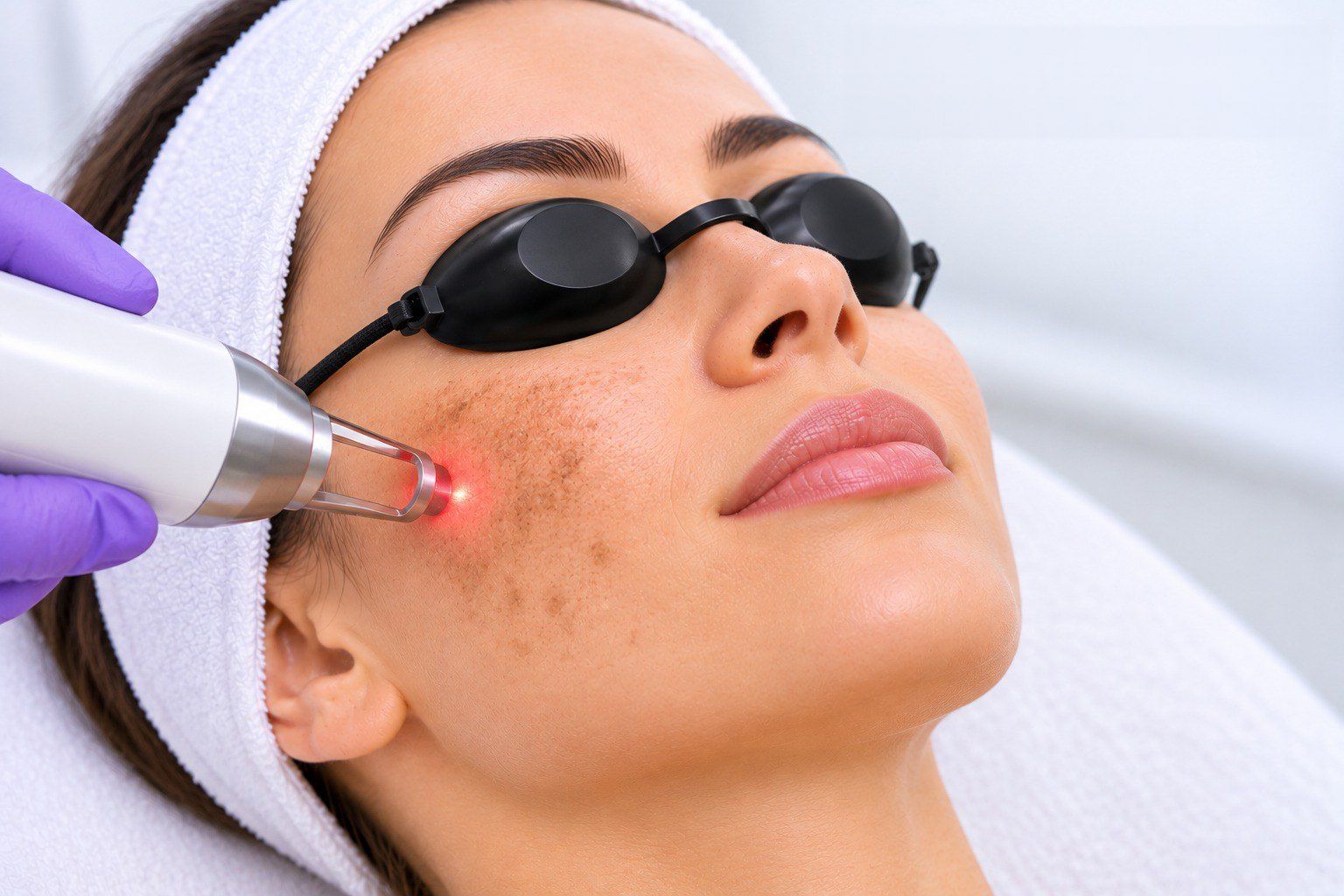
Pigmentation
PicoLaser Pigmentation Treatment
Advanced Skin Rejuvenation & Pigment Correction
Reveal a clearer, brighter and more even-looking complexion with PicoLaser Pigmentation Treatment at DermaTec Med Aesthetic Clinic.
PicoLaser treatment may help improve the appearance of sunspots, age spots, freckles and selected forms of unwanted pigmentation.
Online offer available.See online offers
- Pulse length
- Picoseconds
- Sessions
- Planned for your skin
- First step
- Free consultation
About the treatment
What Is PicoLaser?
PicoLaser is an advanced laser technology designed to target unwanted pigmentation and selected skin discolourations. It uses ultra-short pulses of laser energy, measured in picoseconds (one trillionth of a second), to break down pigment particles into smaller fragments that can gradually be cleared by the body's natural processes.
Traditional pigment lasers generally use longer pulse durations. Picosecond lasers deliver energy in much shorter pulses, producing a predominantly photomechanical or photoacoustic effect that can fragment pigment while limiting heat transfer to surrounding tissue.
Depending on the laser wavelength, technology and individual skin condition, it may also be considered for certain types of melasma and post-inflammatory hyperpigmentation. At DermaTec Med Aesthetic Clinic, every treatment begins with a professional skin assessment to identify the type of pigmentation and determine the most appropriate treatment approach.
PicoLaser systems may use different wavelengths, including:
- 532 nm
- Commonly used for selected superficial pigment concerns.
- 755 nm
- Used for selected pigment targets and other specific laser indications.
- 1064 nm
- Can target deeper pigment and may be considered for selected pigmentation concerns, including certain cases of melasma.
The correct wavelength depends on the type and depth of pigmentation, skin phototype and the specific laser device.
How it works
How Does PicoLaser Pigmentation Treatment Work?
PicoLaser works by delivering very short pulses of laser energy to selected pigment within the skin.
01
Selective pigment targeting
The laser wavelength is selected to interact with the targeted pigment, particularly melanin in suitable pigmented lesions.
02
Photomechanical fragmentation
The ultra-short laser pulses produce a rapid photoacoustic effect, helping break pigment into smaller particles.
03
Natural pigment clearance
The fragmented pigment is gradually processed and cleared by the body's natural mechanisms.
04
Progressive improvement
As the skin recovers and pigment is cleared, the treated area may gradually become lighter and more even in appearance.
The number of treatments required depends on the pigmentation type, depth, colour, skin response and laser technology.
What it treats
What Types of Pigmentation Can PicoLaser Treat?
PicoLaser may be suitable for selected benign pigmentary conditions.
Sunspots and age spots
Sunspots, also known as solar lentigines, are flat brown marks commonly associated with long-term sun exposure.
PicoLaser may help:
- Reduce the appearance of selected sunspots.
- Improve uneven pigmentation.
- Create a more uniform-looking complexion.
- Target selected superficial pigmented lesions.
Freckles
Freckles are small areas of increased pigmentation that may become more visible following sun exposure.
PicoLaser may help lighten selected freckles, although new freckles can develop with further UV exposure.
Uneven skin tone
Uneven pigmentation can result from sun exposure, ageing, inflammation and other factors.
PicoLaser may help improve the appearance of selected areas of unwanted pigmentation and create a more even-looking complexion.
Needs careful assessment
Post-inflammatory hyperpigmentation
Post-inflammatory hyperpigmentation (PIH) refers to dark marks that remain after inflammation or injury to the skin.
Common causes include:
- Acne.
- Skin irritation.
- Insect bites.
- Previous skin procedures.
- Inflammatory skin conditions.
PicoLaser may be considered for selected cases, but laser treatment can sometimes worsen pigmentation, particularly if the skin is prone to inflammation or pigmentation changes. A careful assessment is essential.
Needs careful assessment
Melasma
Melasma is a chronic pigmentation condition that produces brown or grey-brown patches, commonly on the cheeks, forehead, upper lip and chin.
It is associated with several factors, including:
- Sun exposure.
- Hormonal influences.
- Genetic predisposition.
- Heat and visible light in susceptible individuals.
Certain picosecond laser protocols may improve melasma in selected clients. However, melasma is particularly challenging because pigmentation can return and laser treatment can sometimes trigger worsening or post-inflammatory hyperpigmentation.
For this reason, laser treatment is not always the first choice for melasma. A personalised management plan may include topical skincare, strict sun protection and specialist assessment.
Benefits
Benefits of PicoLaser Pigmentation Treatment
Depending on the pigmentation type and individual response, potential benefits include:
- Helps reduce the appearance of selected dark spots.
- Improves the appearance of sun-damaged skin.
- Helps lighten selected freckles.
- Promotes a more even-looking skin tone.
- Targets pigment with precision.
- Uses ultra-short laser pulses.
- May involve relatively limited downtime for suitable treatments.
- Can be used as part of a wider skin rejuvenation programme.
Results vary, and complete removal of pigmentation cannot be guaranteed.
Treatment areas
Which Areas Can Be Treated?
Depending on the laser device and clinical assessment, suitable areas may include:
Face
- Forehead.
- Cheeks.
- Nose.
- Upper lip.
- Chin.
- Selected areas of facial pigmentation.
Other areas
- Neck.
- Décolletage.
- Hands.
- Selected areas of sun-exposed skin.
The suitability of each area depends on the pigmentation type and skin condition, and is confirmed at your consultation.
Your appointment
What Happens During a PicoLaser Treatment?
A typical treatment appointment involves several stages.
01
Skin consultation and assessment
The practitioner examines the pigmentation, reviews medical history and determines whether the marks are suitable for laser treatment. Suspicious or undiagnosed pigmented lesions must be medically assessed before any cosmetic laser procedure.
02
Skin preparation
The treatment area is cleansed to remove makeup, oils and surface impurities.
03
Protective eyewear
Appropriate wavelength-specific protective eyewear is provided to protect the client's eyes and the practitioner's eyes.
04
Laser application
The practitioner selects the appropriate device settings and treats the targeted areas using the correct technique.
05
Post-treatment care
The skin is assessed and appropriate soothing skincare and sun protection advice are provided.
Treatment duration varies according to the size and number of areas being treated.
Sessions
How Many Sessions Are Required?
The number of sessions depends on the type, depth and extent of pigmentation.
Some superficial benign pigmented lesions may respond to a small number of treatments, while more complex pigmentation conditions may require a longer treatment plan. A general treatment plan may involve:
- Initial assessment
- Skin and pigmentation evaluation
- Treatment course
- Individualised according to the condition and laser response
- Review
- Assessment of healing and pigment improvement
- Maintenance
- Where appropriate, combined with skincare and sun protection
Sessions are spaced according to the treatment protocol and your skin's recovery. Melasma and recurrent pigmentation often require longer-term management rather than a fixed course of laser sessions.
Comfort
Is PicoLaser Treatment Painful?
Most clients tolerate PicoLaser treatment reasonably well, although comfort varies according to the treatment area, wavelength, settings and individual sensitivity.
Clients may experience:
- A light snapping sensation.
- Brief warmth.
- Mild tingling.
- Temporary redness or sensitivity.
The practitioner will explain what to expect before treatment and monitor the skin response throughout the procedure.
Downtime
Is There Any Downtime?
Downtime depends on the type of pigmentation treated and the intensity of the laser procedure. Possible temporary reactions include:
- Redness.
- Mild swelling.
- Warmth.
- Temporary darkening of the treated pigment.
- Small crusts or scabs.
- Temporary sensitivity.
Some superficial pigmented lesions may become darker before gradually flaking or fading. Do not pick or remove crusts.
More intensive treatments may require additional recovery time.
Aftercare
PicoLaser Aftercare
Proper aftercare is essential to support skin recovery and reduce the risk of unwanted pigmentation changes.
Immediately after treatment
- Avoid touching or rubbing the treated area unnecessarily.
- Use a gentle moisturiser recommended by your practitioner.
- Apply broad-spectrum SPF 30–50 sunscreen when appropriate.
- Avoid direct sun exposure.
First 24–48 hours
- Avoid excessive heat and very hot showers.
- Avoid saunas and steam rooms.
- Avoid vigorous exercise if it causes significant facial flushing.
- Avoid harsh cleansers and abrasive skincare products.
Following days
- Avoid picking, scratching or removing any crusts.
- Avoid exfoliating scrubs.
- Avoid retinol and strong exfoliating acids until the skin has recovered and your practitioner confirms they can be resumed.
- Continue daily sun protection.
- Avoid tanning and excessive UV exposure.
Follow the specific aftercare instructions provided by your practitioner, as different laser wavelengths and treatment intensities may require different care.
Who it suits
Who Is Suitable for PicoLaser Pigmentation Treatment?
PicoLaser may be suitable for adults who have selected benign pigmented lesions or unwanted pigmentation that has been properly assessed.
Suitability depends on:
- Skin phototype.
- Pigment colour and depth.
- Type of pigmentation.
- Recent sun exposure or tanning.
- Medical history.
- Current medications.
- Previous laser treatments.
- History of pigmentation changes or abnormal scarring.
A consultation is necessary before proceeding.
Postponing treatment
Who Should Avoid or Postpone Treatment?
Treatment may need to be postponed or avoided in certain circumstances, including:
- Active skin infections.
- Open wounds in the treatment area.
- Active cold sores in the treatment area.
- Recent sunburn or significant tanning.
- Severe skin irritation or inflammation.
- Certain photosensitising medications.
- Known photosensitivity disorders.
- A history of abnormal scarring or poor wound healing.
- Suspicious or undiagnosed pigmented lesions.
- Medical conditions that may interfere with healing.
Pregnancy and breastfeeding should be discussed during the consultation, and elective cosmetic laser treatment is generally postponed during pregnancy.
Safety
Possible Side Effects and Risks
PicoLaser is a non-surgical treatment, but it is not completely risk-free.
Possible side effects include:
- Temporary redness and swelling.
- Mild discomfort.
- Temporary darkening of the treated pigment.
- Blistering or crust formation.
- Post-inflammatory hyperpigmentation.
- Hypopigmentation (lightening of the skin).
- Burns.
- Infection.
- Scarring, although uncommon.
Clients with darker skin phototypes may have an increased risk of unwanted pigmentation changes with some laser wavelengths and settings. Appropriate device selection, conservative treatment planning and strict sun protection are important.
Questions
Frequently Asked Questions
How quickly will I see results?
Some superficial pigment may darken immediately after treatment before gradually fading. Other pigmentation conditions require several sessions and longer periods of observation.
Does PicoLaser permanently remove pigmentation?
PicoLaser may significantly improve selected pigmented lesions, but it cannot prevent new pigmentation from developing. Sun exposure, ageing and hormonal factors can contribute to recurrence.
Can PicoLaser remove melasma?
It may improve selected cases, but melasma is a chronic and recurrent condition. Laser treatment must be carefully selected and is not suitable for everyone.
Is PicoLaser safe for darker skin?
It can be considered for selected clients with darker skin types, but the choice of wavelength, settings and technique is particularly important. Pigmentation changes can still occur, so careful assessment is essential.
Can I have PicoLaser during summer?
Treatment may be possible, but recent tanning and UV exposure increase the risk of complications. Strict sun protection is essential, and your practitioner will determine whether it is appropriate to proceed.
Will I need more than one treatment?
This depends on the pigmentation type, depth and individual response. Some lesions respond after a limited number of sessions, while others require a longer treatment plan.
Can PicoLaser treat all dark spots?
No. Not every dark mark is caused by excess melanin, and some pigmented lesions require medical diagnosis. A skin assessment is necessary before treatment.
Can PicoLaser improve skin texture?
Some picosecond laser systems have fractional handpieces designed to stimulate skin remodelling. This is a separate treatment approach from pigment-targeting procedures and depends on the device.
At the clinic
Why Choose DermaTec Med Aesthetic Clinic?
At DermaTec Med Aesthetic Clinic, we understand that pigmentation concerns can affect both skin appearance and confidence.
Our approach focuses on:
- Individual skin and pigmentation assessment.
- Personalised treatment recommendations.
- Appropriate laser and wavelength selection.
- Careful attention to treatment safety.
- Professional aftercare guidance.
- Follow-up assessment where appropriate.
Our goal is to help you achieve a clearer, brighter and more even-looking complexion through a treatment plan suited to your skin.
Book Your PicoLaser Consultation
Ready to improve the appearance of unwanted pigmentation and uneven skin tone?
Contact DermaTec Med Aesthetic Clinic to arrange a consultation and discover whether PicoLaser Pigmentation Treatment is suitable for your skin.